By Janani Vithanage
As Sri Lanka navigates what seems like the worst financial crisis she’s ever been through, it can be difficult to focus on international news. After all, how can one be blamed for being a bit ignorant about global affairs when one has to worry about things like acquiring enough fuel to travel to work, finding gas to cook tomorrow’s meals or combing through multiple pharmacies until you manage to find the medicines needed for an aging parent’s survival. However, there are a few pieces of news that are pretty noteworthy. For example, as the world begins to slowly recover from the damage wrought by the COVID-19 virus, a new disease has resurfaced – monkeypox. And while leading doctors and scientists have been quick to reassure us that there is no chance of this developing into another COVID-like global pandemic, based on the facts that it is not as contagious as COVID, has been around for over 50 years and is cured by the smallpox vaccine, it is always useful to have your facts straight and stay informed. To make this process easier for you, we’ve compiled 7 basic facts you should know about monkeypox.
1. Monkeypox is a viral zoonosis
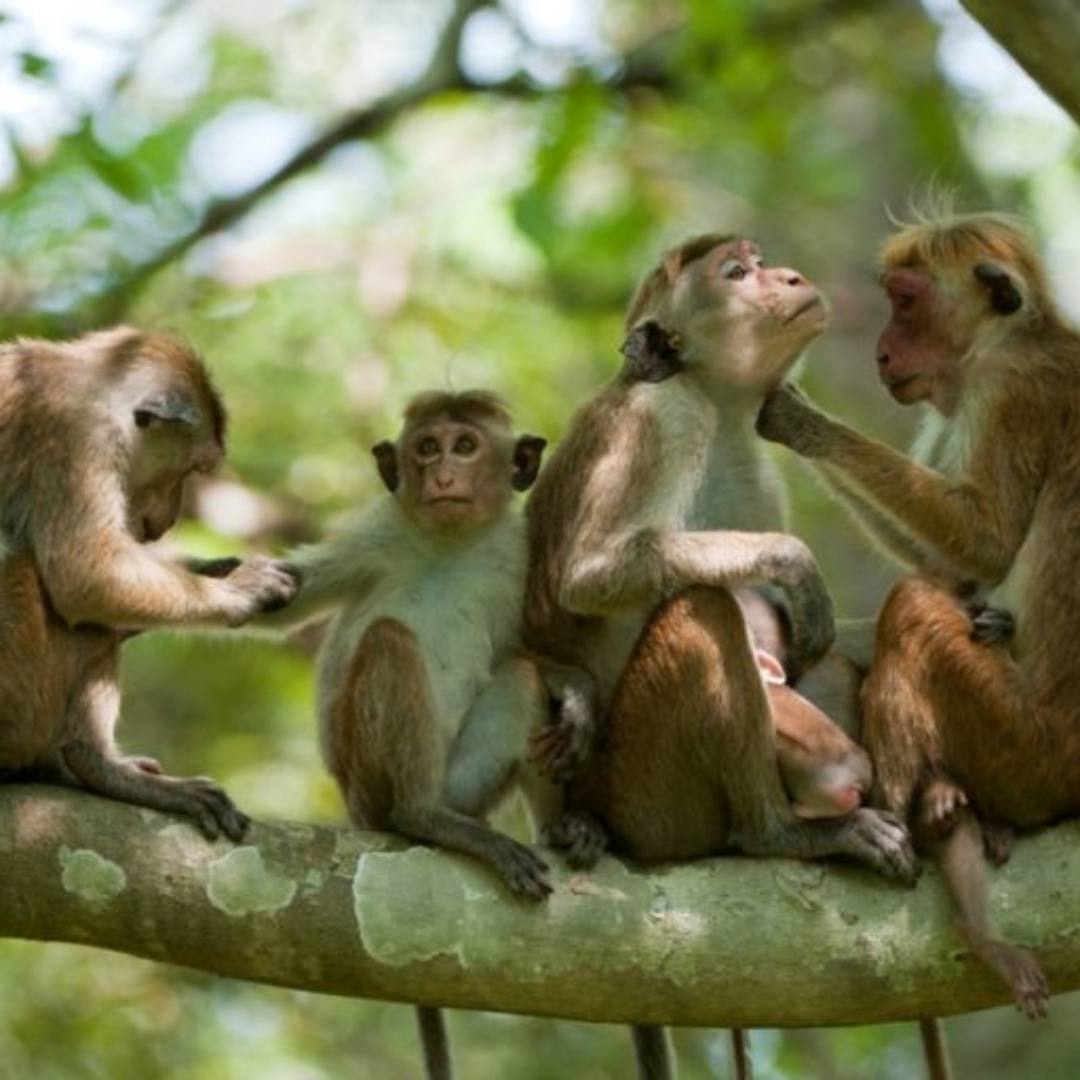
A viral zoonosis is defined as a virus which is transmitted from a vertebrate animal other than humans, to people. This includes any animal with a skeleton, or more specifically a backbone – mammals, birds, reptiles and possibly amphibians. The reason as to why the virus is named “monkeypox” is self-explanatory; it was first identified in monkeys used for research in a Danish laboratory in 1958. According to the WHO, monkeypox is transmitted from monkeys to humans via close contact with an infected monkey or contact with contaminated material. The virus is transmitted between humans through close contact like sexual intercourse or contact with lesions and via contaminated material like bedding, towels or clothes. It could also be spread through large respiratory droplets. Since these cannot travel more than a few feet, the virus cannot be called airborne.
2. The first human case of monkeypox was identified in the Democratic Republic of the Congo in 1970.

The first ever human instance of the viral disease was seen in a 9 year-old boy in the Democratic Republic of Congo in 1970. Since then, cases of monkeypox have been most commonly reported from rural, rainforest covered areas in the Congo Basin, as well as in other rural regions of western and central Africa. 11 African nations have reported human cases, including Benin, Cameroon, the Central African Republic, the Democratic Republic of the Congo, Gabon, Cote d’Ivoire, Liberia, Nigeria, the Republic of the Congo, Sierra Leone and South Sudan.
3. The current global outbreak has reported 200 cases in 12 different non-endemic countries.

According to the WHO, as of the 24th of May, over 200 laboratory confirmed cases and more suspected cases have been identified in 12 countries in which monkeypox is not usually prevalent, including the United States, Canada, the United Kingdom, Germany, Australia and Belgium. Experts claim that the root source of the spread may have been through 2 raves held in Belgium, followed by infected party-goers transmitting the disease to fellow countrymen after returning home from their travels. While Belgium has imposed a compulsory 21-day quarantine for individuals infected with the virus, experts in other countries continue to trace patient contacts in an attempt to minimise the spread.
4. The incubation period of monkeypox ranges from 5-21 days.

The incubation period of a disease refers to the amount of time that passes between when a person is exposed to the causative agent (in this case the virus) to when symptoms of the disease first appear. For monkeypox, this can take from 5-21 days. Whether or not a patient is infectious during the incubation phase depends on the specific disease. In the case of monkeypox, patients are not contagious during this period and can only transmit the virus to another person once the symptoms begin to show.
5. The onset of symptoms can be divided into 2 periods

The first phase is called the invasion period. This typically lasts up to 5 days and is characterised by fever, intense headache, swollen lymph nodes, back pain, muscle pain and extreme fatigue. The second stage is focused on skin eruptions, which usually occur between 1-3 days after the onset of fever. The rash progresses from macules, which are flat lesions, to papules, which are slightly raised, firm lesions. These then develop into vesicles, which are lesions filled with a clear fluid, to pustules, which are filled with a yellowish fluid. These eventually become crusts which dry up, fall off and scab over. The rash most commonly occurs on the face and hands.
6. Monkeypox is similar to smallpox

The monkeypox virus is from the same viral family as the variola virus that causes smallpox, which was declared globally eradicated by the WHO in 1980, thanks to a vaccine discovered by Edward Jenner in 1796. While the symptoms presented by monkeypox are very similar to those of smallpox, the good news is that it is much less severe. While monkeypox is a self-limiting disease that typically recedes in 2-4 weeks, smallpox, a disease said to have existed for over 3000 years, was highly contagious, killed millions of people and left many others permanently scarred or even blinded before its eradication. A factor which allows monkeypox to be differentiated from smallpox is the swelling of lymph nodes, a symptom which isn’t presented in smallpox cases.
7. Monkeypox is preventable

Observational studies have confirmed that the smallpox vaccine, which is administered within the first 3 months of life, provides 85% protection against monkeypox aqs well. This would help to prevent the onset of monkeypox in most cases, or restrict the disease to a milder form. Also, in 2019, a new vaccine based on the modified, attenuated vaccinia virus was approved for the prevention of monkeypox. In addition to preventive vaccines, an antiviral drug, tecomirivat, was licensed by the European Medical Association, for monkeypox earlier this year. Both the new vaccine and tecovirimat are not yet widely available and the drug may require further clinical trials, but we feel sure that if the need arises, health experts will ensure that these are carried out and the drug/vaccine are made available.
The monkeypox outbreak has not reached Sri Lanka (or any other Asian country for that matter), but to be on the safe side, seek immediate medical attention if you notice an unusual rash on yourself or your loved ones. Stay safe and stay informed!